BAVBD Members Present New Research on Tick-Borne Diseases in the Balkans
The Balkan Association for Vector-Borne Diseases (BAVBD) is pleased to highlight the active scientific participation of three of its members—Dejan Jakimovski, Ana Marija Radevska and Pavle Banović—who contributed one oral and two poster presentations addressing important challenges in tick-borne diseases across the Balkans. Their work reflects the Association’s multidisciplinary mission, linking clinical medicine, laboratory diagnostics, epidemiology and education in support of stronger regional cooperation.
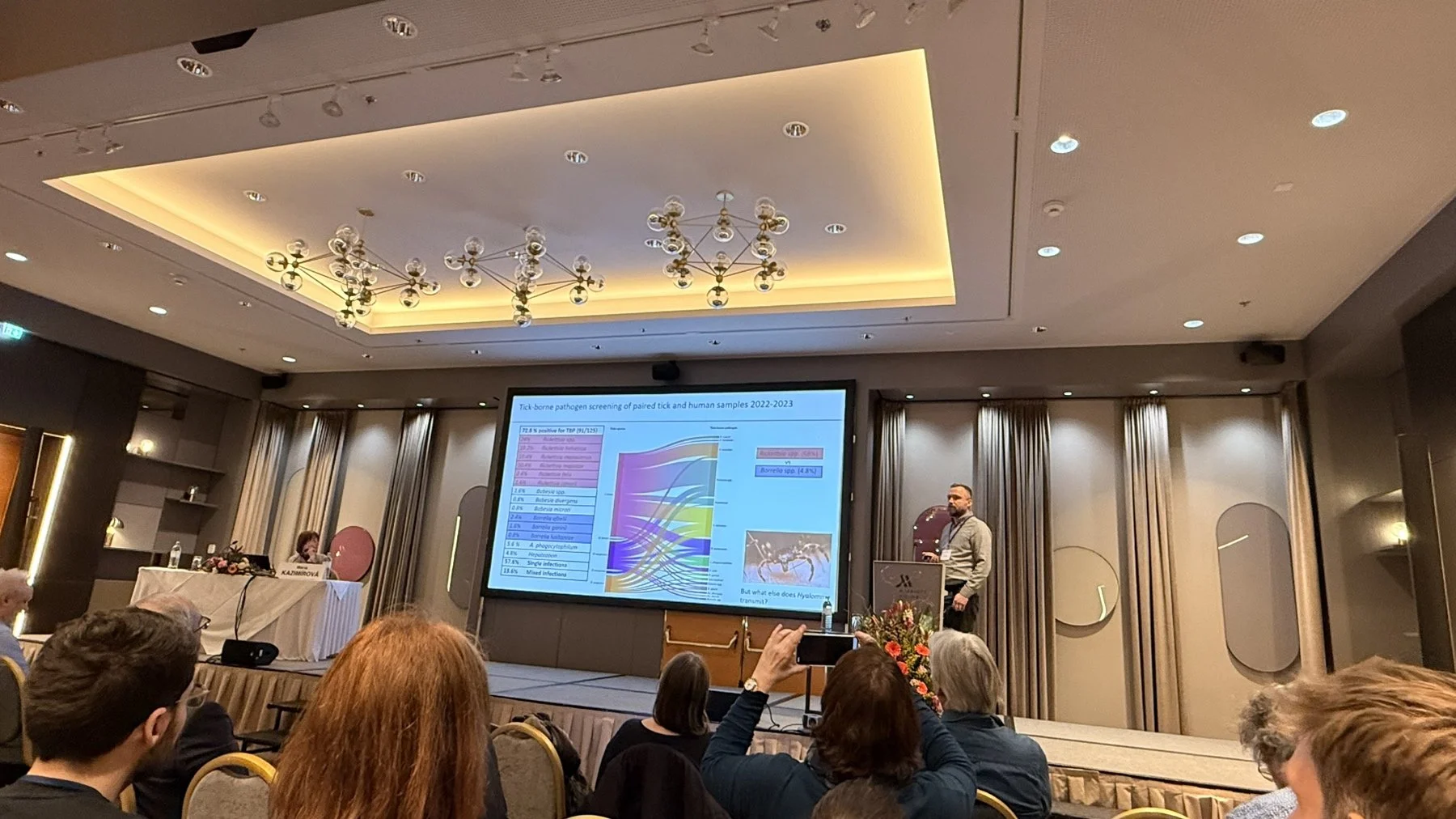
Dejan Jakimovski, member of the BAVBD Clinical Medicine Task Force, delivered the oral presentation Applying a Multidisciplinary Model to Assess Tick-Human Pathogen Circulation in North Macedonia. His presentation summarized the results of an integrated initiative launched in 2022 to strengthen the recognition of tick-borne diseases in North Macedonia through coordinated tick-human sampling, molecular screening, seroepidemiological studies and systematic clinical case identification. The findings showed that Ixodes ricinus accounted for 62.4% of ticks biting humans, followed by Hyalomma spp. and Rhipicephalus sanguineus, while molecular analyses revealed a substantial pathogen burden, particularly Rickettsia spp., detected in 44.35% of ticks. Comparative seroepidemiological data from Skopje and Novi Sad further suggested a clear north-south gradient in exposure patterns, with higher exposure to spotted fever group rickettsiae in the south and higher anti-Borrelia burgdorferi sensu lato IgG seropositivity in the north. Clinical observations, including cases of Mediterranean spotted fever, TIBOLA and Lyme borreliosis, confirmed the endemic circulation of spotted fever group rickettsiae and Borrelia spp. in North Macedonia and underscored the need for improved diagnostic capacity, coordinated surveillance and stronger regional collaboration.
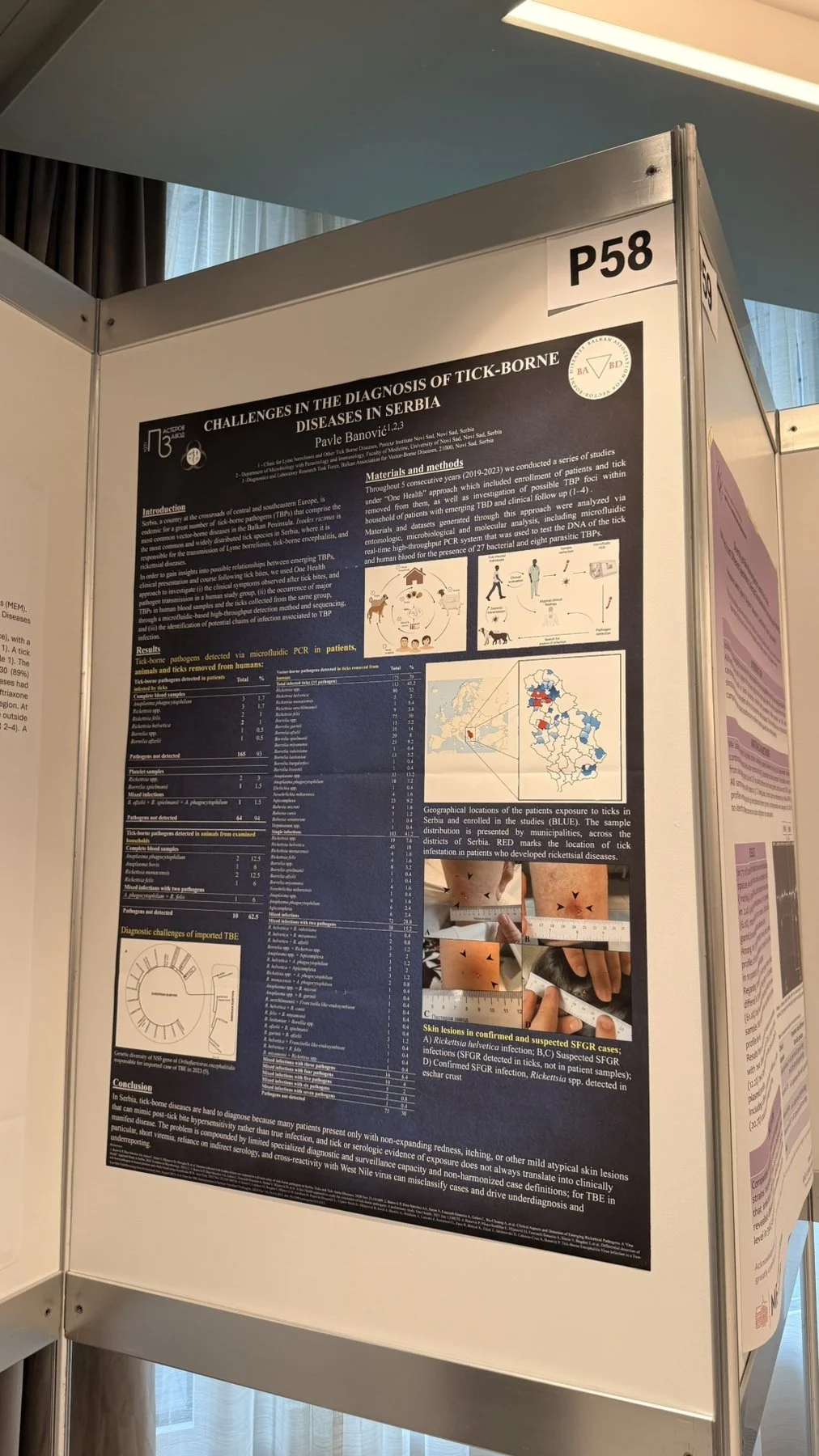
Pavle Banović presented the poster Challenges in the Diagnosis of Tick-Borne Diseases in Serbia, highlighting results from a four-year One Health approach implemented in Serbia. This interdisciplinary work combined clinical data, entomological sampling, microbiological investigations and high-throughput molecular testing to better understand transmission pathways between ticks, animals and humans. Among 250 ticks removed from patients, Ixodes ricinus was the dominant species, representing 92.4% of all samples, while Rickettsia spp. were the most frequently detected tick-borne pathogens, found in 45.2% of ticks. The study also documented atypical infections caused by Rickettsia helvetica and Rickettsia raoultii, exposure to tick-borne encephalitis virus, and two imported cases of tick-borne encephalitis, one of them fatal. The presentation emphasized the importance of innovative diagnostic approaches, including direct testing of platelet fractions from patient blood, and showed how the One Health model developed in Serbia can support improved diagnosis of emerging tick-borne diseases across the Balkans.
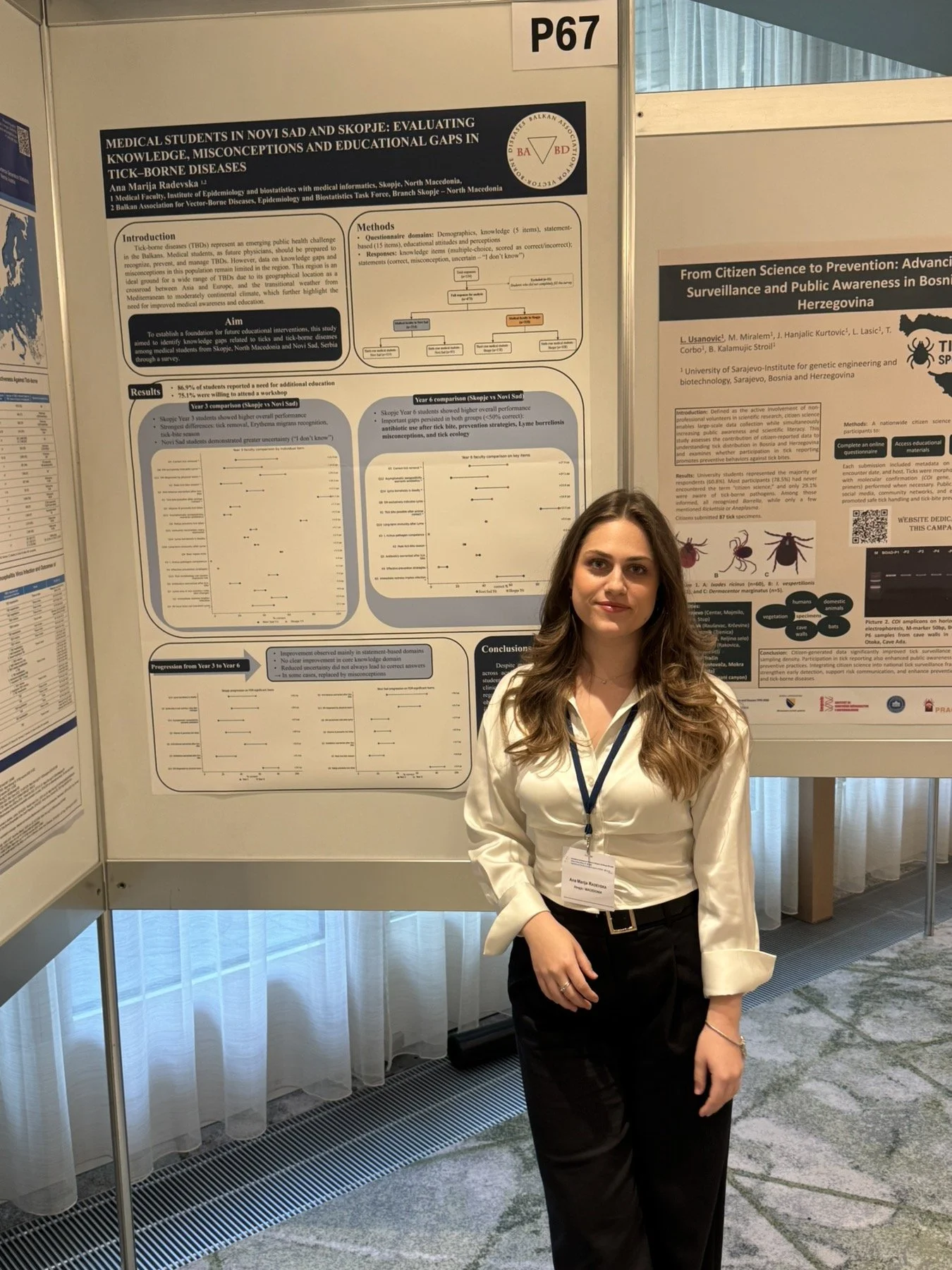
Ana Marija Radevska, member of the BAVBD Epidemiology and Biostatistics Task Force, presented the poster Medical Students in Novi Sad and Skopje: Evaluating Knowledge, Misconceptions, and Educational Gaps in Tick-Borne Diseases. Based on a cross-sectional study among medical students in Serbia and North Macedonia, the presentation examined knowledge, attitudes and educational needs related to ticks and tick-borne diseases among future healthcare professionals. Of 524 students approached, 473 completed the questionnaire. Although the results showed good basic knowledge regarding tick exposure, seasonality and Lyme borreliosis, important gaps were identified in the recognition of other tick-borne pathogens, correct tick-removal technique, and the appropriate use of antibiotics and tetanus prophylaxis after tick bite. The study also pointed to differences between junior and senior students, as well as between Novi Sad and Skopje, while revealing strong support for additional education on tick-borne diseases. These findings highlight the need for more targeted, practical and case-based teaching in Balkan medical curricula.
Together, the presentations by Dejan Jakimovski, Pavle Banović and Ana Marija Radevska demonstrate the breadth of expertise within BAVBD and the growing importance of regional cooperation in addressing vector-borne and tick-borne diseases. By advancing research on pathogen circulation, diagnostic innovation and medical education, BAVBD members continue to contribute to a stronger scientific and public health response across the Balkans.